How Your Sleeping Position May Be Causing Your Aches and Pains
Practical tips to improve sleep posture & reduce strain to your body
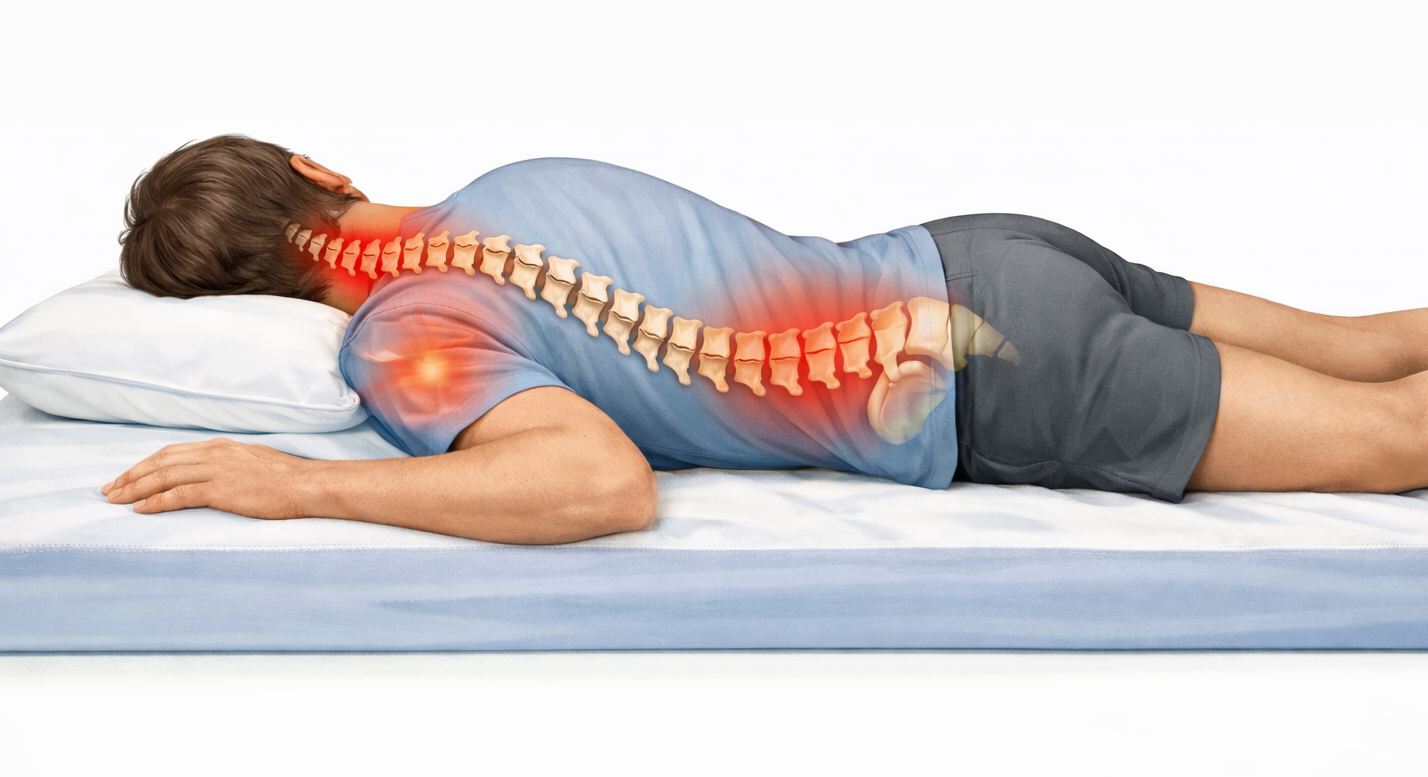
Just as sitting with poor posture throughout the day can lead to tightness and discomfort, sleeping in poor alignment night after night can also reduce mobility and contribute to soreness and pain.
No single sleep position is solely responsible for causing musculoskeletal issues; rather, it is the repeated use of an awkward position over time. Habitually, placing your body in poor alignment can shorten some muscles while lengthening and weakening others. Placing the spine and joints out of proper alignment may also reduce blood flow and compress nerves, leading to tingling, numbness, muscle guarding, and spasm. As these stresses accumulate over time, they can lead to stiffness and the aches and pain you experience during the day.
The following examples explain how common sleep positions may contribute to discomfort and what simple adjustments may help.
Common Sleeping Positions That Can Lead to Stiffness and Pain
Sleeping on Your Stomach
Sleep Position Affects
Neck
Lower back
Hips and Knees
How Your Sleeping Position May Be Causing Aches and Pains
Neck
Sleeping on your stomach requires turning your head to one side for extended periods. Muscles on one side of the neck become shortened and tight, while muscles on the opposite side are stretched and may weaken over time. This sustained rotation can lead to one-sided tightness, reduce neck mobility, cause stiffness, and even headaches.
Lower back
Using multiple pillows or allowing the abdomen to sink into the mattress can increase the arch in your lower back. This excessive spinal extension may compress the lumbar spine and tighten the surrounding muscles, contributing to stiffness and lower back pain.
Hips and knees
Habitually sleeping with one hip rotated and the knee bent can create asymmetrical muscular tightness across the pelvis and thighs. Over time, this imbalance may contribute to stiffness in your hips and knees, impacting your posture, body alignment and the way you walk.
Simple Sleep Position Adjustments That Can Reduce Stiffness and Pain
Alternate the direction your head turns, as well as the position of your hips and knees.
Place a small pillow under your pelvis to reduce lower back arching.
Try starting the night on your back or gradually transitioning toward back sleeping.
Perform gentle stretching and mobility exercises for your neck, lower back, hips, and thighs during the day to counteract overnight positioning.
Sleeping on Your Side
Sleep Position Affects
Shoulders
Thoracic Spine (upper/mid back)
Lower back
Hips
Knees
How Your Sleeping Position May Be Causing Aches and Pains
Shoulders
Your body weight rests on one shoulder, creating pressure that can reduce circulation and lead to numbness or tingling. This position may also irritate the rotator cuff and tighten the chest and front shoulder muscles, especially in people with broader shoulders. Over time, this can reduce shoulder mobility and cause discomfort with movement.
Thoracic spine
Side sleeping often causes the upper body to round forward. This posture shortens the chest muscles while overstretching the upper back muscles, which can contribute to a hunched posture with increased thoracic curvature. If you already spend much of your day sitting, this position can exacerbate poor posture potentially worsening stiffness and pain, causing trigger points along the shoulder blades and limiting neck and shoulder mobility.
Lower back
For individuals with broad hips and a narrow waist, if the waist is not adequately supported, the spine will curve downward toward the mattress. This will create uneven stress on the spine and lead to tightness on one side of the lower back, contributing to poor posture, stiffness and decrease mobility.
Hips
Body weight resting on one hip can create pressure that reduces circulation causing numbness and tingling to the bottom hip while also overstretching and weakening muscles in the upper outer thigh. Pelvic rotation during sleep may stress the sacroiliac (SI) joint and contribute to asymmetrical tightness through the pelvis and thighs. Over time, consistently sleeping on one hip may lead to hip stiffness, knee discomfort, and sciatica pain as well as impact your posture, body alignment and the way you walk.
Knees
Direct knee-on-knee pressure can irritate the joint surfaces and surrounding ligaments as well as cause pelvis rotation.
Simple Sleep Position Adjustments That Can Reduce Aches and Pains
Try starting the night on your back to reduce the time resting on your side.
Place a pillow behind your back to support a semi-side or semi-back sleeping position. reducing pressure on the bottom shoulder and hip.
Hold a pillow at your chest to prevent the upper body from rounding forward.
If your waist is significantly narrower than your hips, place a small pillow between your waist and the mattress to support the spine.
Place a pillow between your knees to keep your pelvis aligned and reduce knee-on-knee pressure.
A body pillow can help reduce stress to the shoulders and chest, hips, knees, and ankles.
Perform gentle stretching and mobility exercises for your shoulders, chest, thoracic spine, and hips during the day to counteract overnight positioning.
Sleeping on Your Back
Sleep Position Affects
Leg alignment
Calves and Achilles tendon
How Your Sleeping Position May Be Causing Aches and Pains
Leg alignment
If your legs roll outward during sleep, the outer hip muscles may gradually tighten. Over time, this positioning may cause your feet to turn outward when walking and can contribute to discomfort in your hips, inner knees, or ankles.
Calves and Achilles tendon
Tightly tucked bedding can push your feet into a downward (pointed) position for long periods. Over time, this may contribute to shortening of the calf muscles and Achilles tendon, as well as stiffness in the ankles and symptoms associated with plantar fasciitis.
Simple Sleep Position Adjustments That Can Reduce Aches and Pains
Realign your legs so your knees and toes point upward.
Loosen the bedding at the foot of your bed to reduce downward pressure on your feet.
Perform gentle stretching and mobility exercises for your outer hips, calves, ankles and feet during the day to counteract overnight positioning.
Other Sleeping Habits That May Contribute to Discomfort
Arms overhead while sleeping
This position can strain the shoulder joints and compress nerves, leading to tightness, numbness, or tingling in the arms and hands. When combined with stomach sleeping, it can also tighten chest muscles and overstretch upper back muscles, contributing to rounded posture and decreased shoulder mobility.
A pillow that is too high or too flat
Improper pillow height can force the neck into too much bending or arching throughout the night. This places the neck in poor alignment and may contribute to stiffness, limited mobility, and headaches.
Sleeping in the fetal position every night
Keeping the shoulders, chest, hips, and knees flexed for long periods can shorten muscles such as the chest, front shoulders, hip flexors, and hamstrings while lengthening and weakening muscles in the upper back, glutes, and quadriceps. This imbalance can contribute to a tight, hunched feeling during the day, that can impact posture, body alignment and the way you stand and walk.
Poor sleep quality due to discomfort
When sleep is disrupted by discomfort, the body has less opportunity to rest and recover. As a result, muscles may feel tighter and stiffer the next day.
Signs Your Sleep Position May Be Contributing to Your Pain
You wake up stiff but loosen up after moving.
You experience numbness and tingling that goes away with repositioning.
Pain is worse in the morning than later in the day.
Tightness is one-sided or uneven.
Stretching helps temporarily, but the tightness returns daily.
Conclusion
Changing long-standing sleep habits takes time, so be patient with yourself. Even small adjustments such as adding a pillow for support, loosening the bedding around your feet, or changing how you start the night can gradually improve alignment and reduce stress on your muscles and joints. Making these small changes, along with regular stretching and movement during the day, can ease stiffness and pain, helping you wake up feeling more comfortable and refreshed.
Learn More
For clear instructions on stretches and mobility exercises to offset overnight positioning, see:
If you would like more guidance on your body’s posture, alignment, mobility, or flexibility, explore these assessments: