Taking the Mystery Out of Acute Lower Back Pain
My 24-year-old daughter recently complained of pain in the left side of her lower back and hip. She told me, “All I did was bend down to tie my sneaker and my back started to hurt. The pain hasn’t gone away.” She was experiencing acute lower back pain accompanied by muscle spasms along the left side of her lower back that extended into her left hip.
“How did this happen if I didn’t hurt myself?”
Prior to tying her sneaker, she could bend and twist without any issues. This was the first time she had ever experienced lower back pain, and it seemed to appear out of nowhere.
But pain like this rarely has no cause. Her pain most likely was the result of something she had been doing repeatedly over days, weeks, or even months.
The real cause: repetitive strain and prolonged positioning
My daughter is a nurse in the NICU. During her 12-hour shifts, she bends forward multiple times for extended periods while caring for babies. She had been doing this job for about eight months.
This repetitive forward bending over the past eight months has been placing pressure on the discs between the vertebrae in her lumbar spine. Over time, as this pressure accumulates, the body begins to send warning signs; symptoms of pain, numbness and/or tingling that your tissues are being stressed and becoming injured.
Why left side pain?
After asking more questions about her work habits, we learned another important detail. In addition to frequent forward bending, she feeds the babies in a distinct seated position, supporting them against her crossed left leg.
That position alone is not harmful. The problem was the repetition. Holding that same posture multiple times per shift, created uneven stress through her lower back and hip affecting her left side.
What is happening inside the spine?
Each time you bend forward, the vertebrae in your spine move closer together in the front, which pushes the fluid inside the disc between them backward.
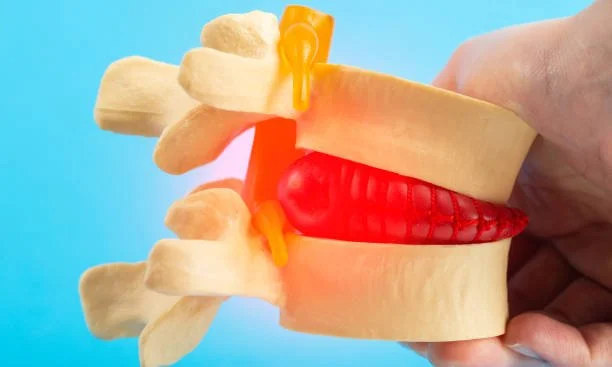
Pressure on Vertebral disc created by forward bending
Over time, this repetitive pressure can weaken the outer wall of the disc, allowing the fluid to bulge beyond its normal boundary, resulting in a bulging disc. That bulge can irritate and press on nearby lumbar spinal nerves, leading to sciatica symptoms such as:
Pain
Numbness
Tingling
Discomfort radiating into the hip, buttock, or down the leg
These symptoms are your body’s way of signaling that something needs to change.
If this pressure continues and is not relieved, the disc tissue can weaken further and eventually rupture, resulting in a herniated disc.
In my daughter’s case, the disc fluid was most likely bulging outward and to the left, triggering muscle spasms as her body attempted to protect the area. This muscle spasming and pain in her lower back and hip occurred after months of repetitive bending, twisting to the left, and holding static positions for extended periods.
Keeping Perspective
I reassured my daughter that this type of pain can be common at her age. Her spinal discs are still well hydrated and full of fluid. As we age, disc fluid gradually decreases due to gravity and the stress of everyday activities. This is one reason we lose our height over time.
More importantly, I told her that this does not have to become a chronic condition because of her job or that she thinks “she is getting older.”
What to Do to Alleviate Pain and Support Healing
Acute Care
Keep moving, to promote blood flow to this area. Tight, spasming muscles lack proper circulation, which contributes to pain.
Apply heat to this area to help relax tight muscles and improve blood flow.
Avoid bending forward, especially with your lower back. If you must bend, hinge at your hips keeping your back straight and your vertebrae in their normal alignment.
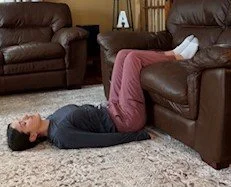
Gentle distraction (See Title Picture): Lie on your back with your legs supported on a stool, bed, or couch to reduce pressure on the lumbar spine. For added relief, place a heating pad on your lower back and take slow, deep breaths to help the area relax.
Gentle movement: While in the above position, perform gentle pelvic tilts as tolerated. This reassures your nervous system that movement is safe and helps reduce guarding.
Progression of stretches
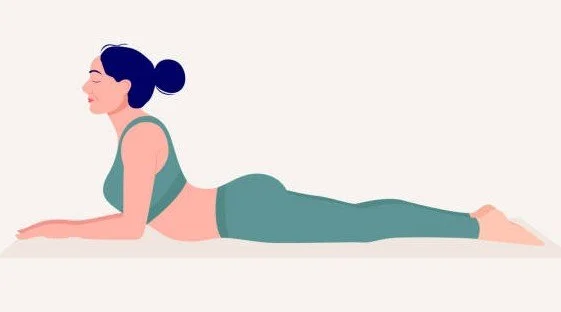
Lie on your stomach. This position places your spine into gentle extension, which reduces stress on the discs. If this is uncomfortable at first, place one or two pillows under the front of your hips. Gradually remove the pillows as your tolerance improves.
Prone press-ups:
Once lying flat on your stomach is comfortable, begin gently lifting your upper body by pushing through your hands or forearms. Increase the lift gradually. The movement should come from the lower back where it meets the pelvis. If your buttocks tighten, take deep breaths to relax.Standing back extensions:
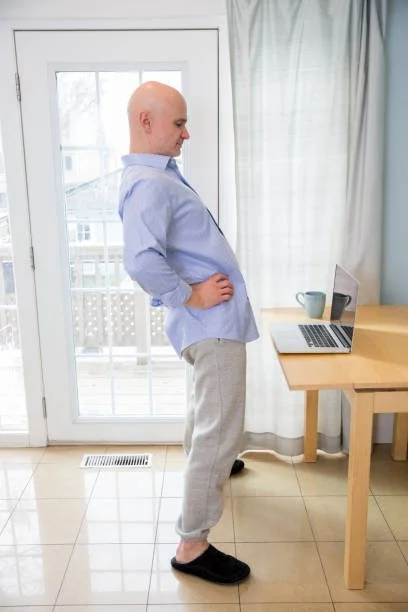
While standing, place your hands on the back of your hips and gently bend backward from your lower back. Hold for up to 10 seconds and repeat or perform 10 slow repetitions.
Everyday & Long-Term Care
Do the opposite, every time you bend forward, especially for several minutes, offset that stress by bending backward. If you frequently twist in one direction, intentionally twist in the opposite direction.
Keep moving, nerves and soft tissues thrive on blood flow. Movement delivers oxygen and nutrients while removing waste products.
Maintain flexibility, identify areas where you are tight and work consistently to keep them flexible.
Be mindful of your posture, avoid slouching or sitting on the edge of a chair without support. Your spine should be supported to keep its natural curves.
Each time you notice poor posture, correct it. Imagine a string gently lifting you from the crown of your head toward your full height.
Patience Matters
My daughter’s lower back and left hip pain improved and resolved in about a week or so. Keep in mind that symptoms can sometimes feel worse before they improve, much like a bruise that darkens before it heals.
By recognizing the strain placed on her body during work, my daughter was able to take measures to mitigate this stress. She also helped her body to heal by implementing the above suggested self-care. Although she cannot completely reduce the physical demands associated with her job, she now has the awareness and means to lessen its impact.
Conclusion
Acute lower back pain rarely happens “out of nowhere.” It is often the result of repeated positions, movements, or postures that slowly overload the spine over time. The body may tolerate these stresses for weeks or months, until one simple movement becomes the tipping point.
Pay attention to your body’s signals of tightness, discomfort and pain, even if your symptoms subside on their own. Ignoring these warning signs increases the risk that pain will recur and potentially worsen with subsequent episodes.
The good news is that when the cause is identified, pain can often be reduced and resolved through movement, posture awareness, and doing the opposite of the positions that created the strain.
Awareness and being proactive are essential for healing and preventing further damage and re-occurring pain and suffering.
Learn More
If you are unsure of the cause of your pain or want guidance on posture, alignment, mobility, or flexibility, explore these assessments:
For additional corrective activities and clear exercise instruction, see: