Functional Strength and Balance Assessments
Note: Some of these assessments will necessitate getting down and up from the floor. It is advisable to conduct these evaluations with another person present to assist you if necessary. If you experience pain during any movement or activity, stop that assessment. Pain can invalidate an accurate evaluation and may indicate an underlying injury or increased risk of injury.
1. Lower Body Strength & Endurance – Timed 30 Second Sit to Stands
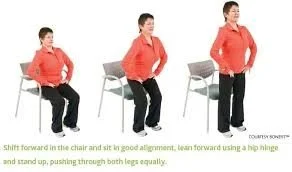
Assessment - Sit in the middle of a chair, place arms on hips, and keep your back straight. On “Go” stand to full height, then sit back down, repeat for 30 seconds. If you are halfway to standing when time ends, include that stance in your count.
Age-Specific Norms:
18-29 years: Average: 24 repetitions (men), 20 repetitions (women)
30-39 years: Average: 21 repetitions (men), 17 repetitions (women)
40-49 years: Average: 18 repetitions (men), 15 repetitions (women)
50-59 years: Average: 15 repetitions (men), 12 repetitions (women)
60-69 years: Average: 13 repetitions (men), 11 repetitions (women)
70-79 years: Average: 11 repetitions (men), 10 repetitions (women)
80-89 years: Average: 9 repetitions (men), 8 repetitions (women)
Explanation - Whether your results were above or below average, it is also crucial to pay attention to how you rise from a seated position, especially from low or soft surfaces. Needing to push off with your arms or struggling to stand up usually points to muscle weakness in your legs and core. Unfortunately, this is a common scenario given our modern day tendency toward long periods of sitting, which can slowly erode muscle strength. The saying "use it or lose it" captures this reality well. Using your arms might also indicate issues with balance or fear of falling, which can be made worse by stiffness, pain, and slower muscle reactions. Scoring below average may signal an increased risk of falls.
2. Abdominal Strength – Sit up Hold
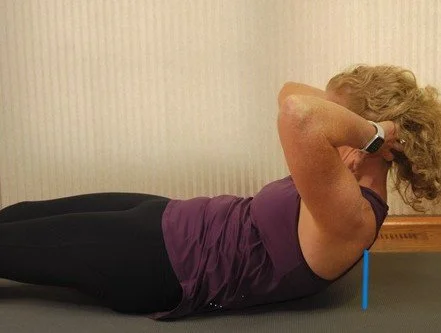
Assessment – Lie on your back with your hands behind your head, lift your head, shoulders and arms off the floor, to a height that your shoulder blades no longer touch the floor and hold. If difficult, perform this “sit up” with your arms crossed in front of your chest. This will make it easier as the weight of the arms behind the head adds resistance.
Explanation - Normal abdominal flexion strength is the ability to lift your upper body off the floor and hold this position with ease. This type of strength is especially vital for senior adults as it helps with essential tasks like rolling, getting into and out of bed, standing up, and rising from the floor, key actions for maintaining independence and safety. Strong core muscles also improve upper body stability, help support good posture and balance during standing and walking, which enables longer participation in physical and social activities.
3. Posterior Core Strength and Balance – Single Leg Bridge
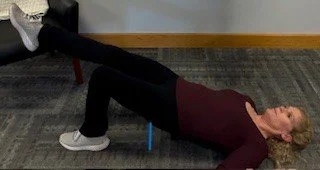
Assessment – Lie on your back with your knees bent and feet flat on the floor. Push through your heels to raise your buttock off the floor and hold at the top. While in this position, lift your right leg and straighten your knee, hold for a few seconds. Bend your leg back in and lower your body to the floor. Repeat by raising your buttock and lifting your left leg at the top of the bridge.
Explanation – I often use this assessment for patients with back or hip pain because it quickly evaluates posterior core strength. Hamstring cramping during this test may indicate weak glutes and/or hamstring muscles.
It is also a good indicator of balance, but in a safe position. (If you take the above picture of the bridge and turn it vertically, it will resemble the single leg stance, assessment 9). Insufficient strength in the core and hip muscles can greatly impair balance. This may be evident if one has difficulty preventing pelvis and trunk rotation, shaking, or dipping when lifting and extending a leg, even though the upper body is supported by the ground and aided by the arms and opposite leg.
4. Core Strength – Timed Plank
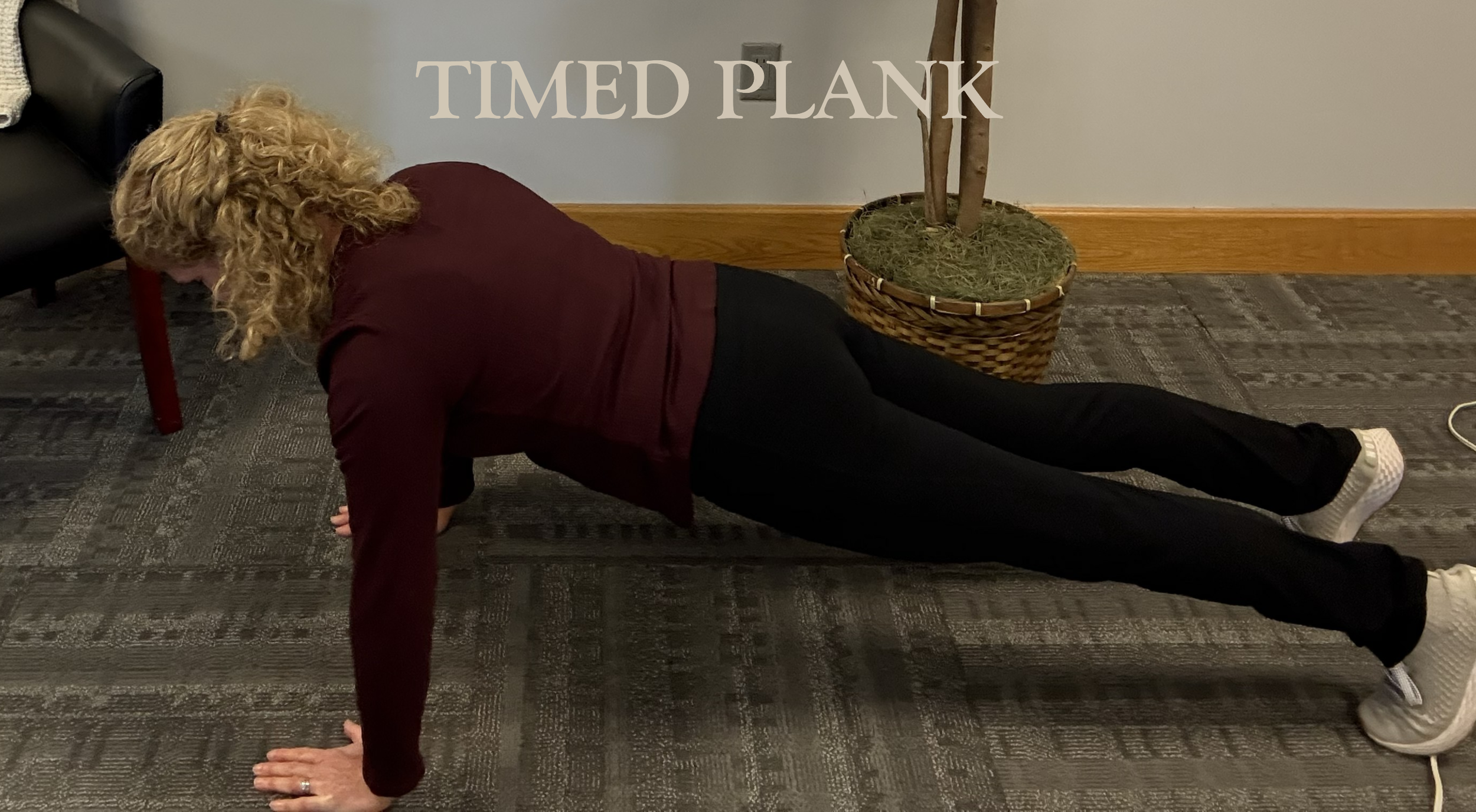
Assessment –
Y
ou can perform this using your forearms or your hands (pictured). Lie on the floor with your elbows bent and directly under your shoulder, forearms are touching the ground or arms are straight and directly under the shoulders. Press up onto your toes keeping your whole body straight as a board and hold. Stop the test when you can no longer keep your body straight or with any movement such as swaying, sagging or bending at the back or hips.
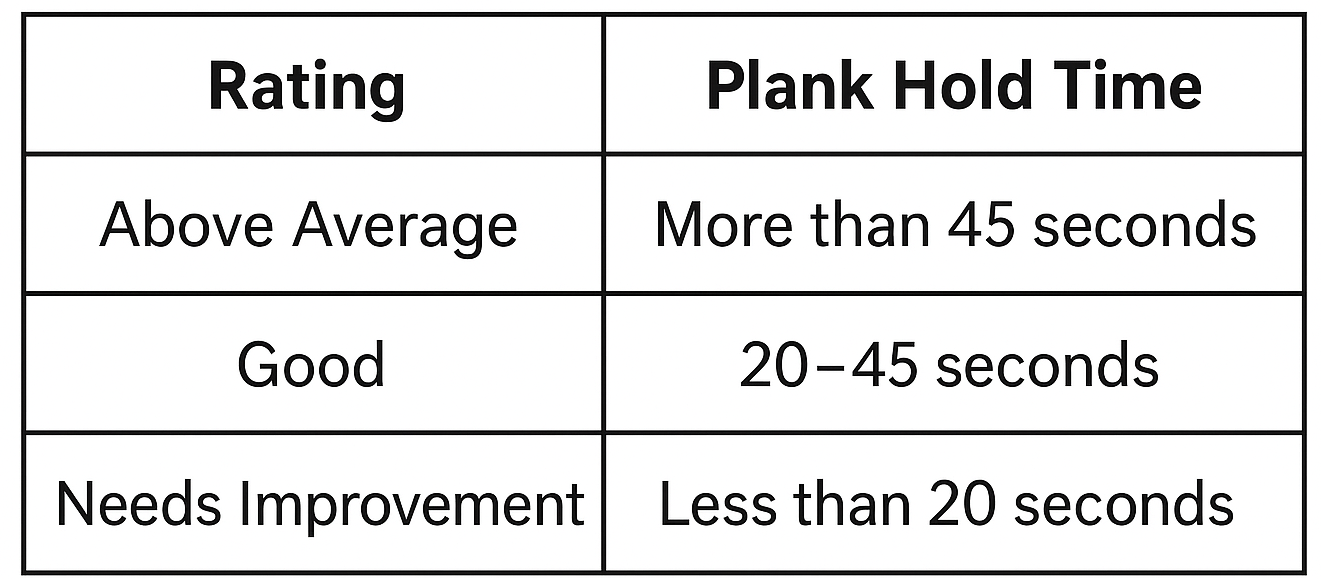
Explanation – Core strength refers to the engagement of muscles that span from the neck to the pelvic floor. Activating these muscles improves breathing, supports proper posture and reduces strain during movements such as bending, lifting, and twisting. Additionally, a strong core contributes to better balance and helps prevent injuries not only to the abdominals and back, but throughout the entire body.
5. Core Strength & Balance - Birddog
Assessment - Begin on your hands and knees, with your hands directly under your shoulders, and knees under your hips. Raise your right arm and left leg and hold them out straight at the same time for a second or two. Then switch and raise your left arm and right leg.
Explanations – The Birddog is another one of my favorite assessments as it measures functional core strength and balance like the single leg bridge but with less floor contact and therefore less support. Think about your daily activities such as reaching up on your tip toes to grab something off a shelf, lifting your leg to step out of a bathtub or balancing while playing a sport like pickleball. Difficulty performing the Birddog or noticing an imbalance between sides may indicate uneven core strength and an increased risk for falls.
6. Lumbar Spine Strength - Back Extension Hold
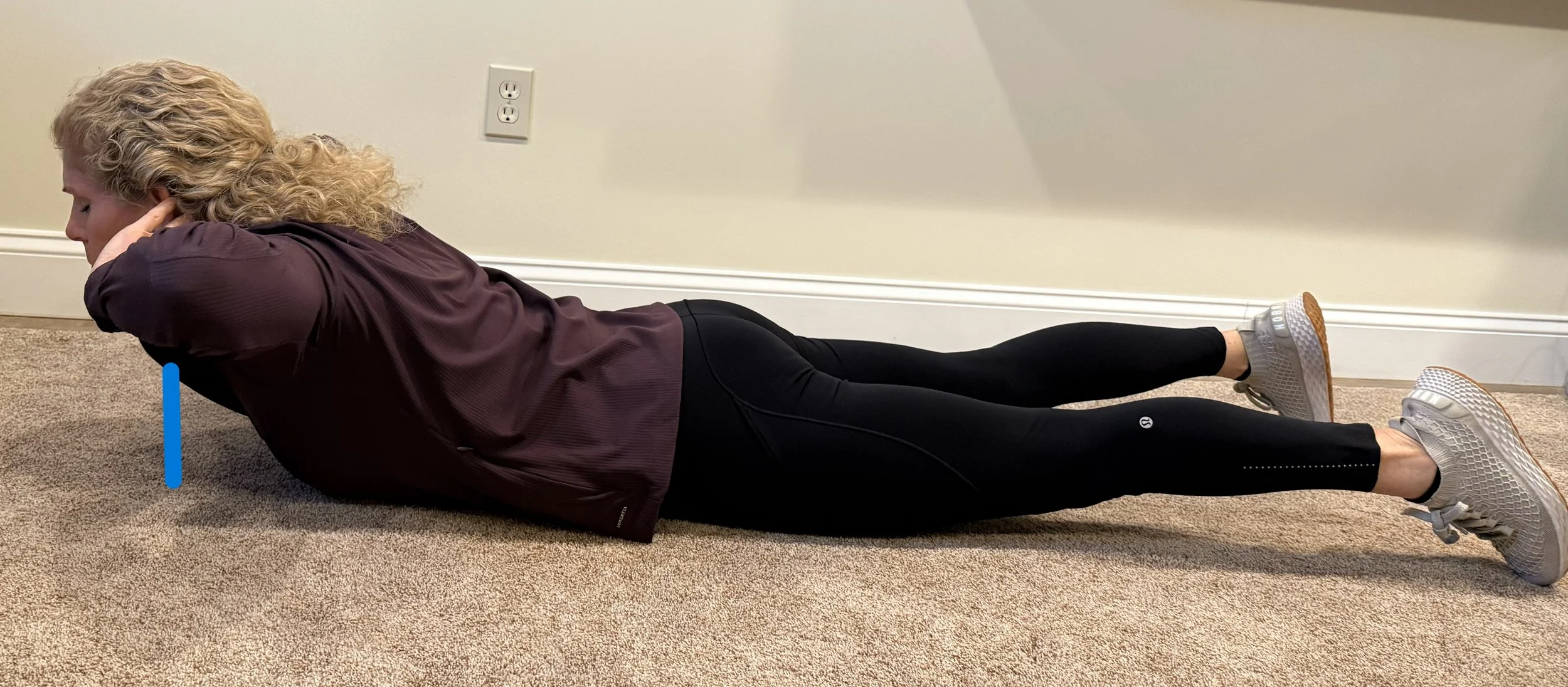
Assessment – Lie on your stomach with your hands behind your head, raise your head, shoulders and chest off the floor and hold at the top.
Explanations – Normal back extensor strength is the ability to raise your upper body completely off the floor and easily hold at the top. Adequate strength is the ability to completely raise your upper body, but it takes significant effort to hold at the top. Strong lower back muscles help prevent injury especially with any reaching, lifting and bending movements.
7. Core strength - Rolling
Assessment - Lie on your back with your arm overhead and legs straight, roll your body to the right onto your stomach without using your arms or legs to push off, then roll back to the left from your stomach onto your back. Repeat rolling your body to the left from your back onto your stomach and then return to lying on your back.
Explanation - If you cannot roll, or one side is harder to roll to than the other, does this surprise you? Difficulty rolling may indicate weak core muscles and/or an imbalance of muscle strength, right vs. left. Rolling is a fundamental movement learned in infancy, and we should never lose our ability to roll.
8. Functional Body Strength & Balance - Rising from the floor
Assessment – Start by lying on your back then stand up to your full height.
Explanation - Did you find it harder than expected to get up from the floor? When was the last time you actually tried? Many people struggle with this task due to reduced core strength and coordination.
Regularly practicing getting up from the floor will improve your strength, coordination, and self-confidence. It also gives you reassurance that, in case of a fall, you will be able to get up on your own without needing assistance from others or emergency services.
9. Static Balance – Timed Single Leg Stance
Assessment – With your eyes open and hands on hips, stand on one leg by raising your other leg to the height of your waist. Start timing when your foot leaves the ground. Stop timing when your hands come off your hips, your legs touch or your raised foot touches the ground. Repeat with other leg.
Age-Specific Norms:
18-39 years: Average: 43 seconds
40-49 years: Average: 40 seconds
50-59 years: Average: 37 seconds
60-69 years: Average: 30 seconds
70-79 years: Average: 19 seconds
Over 80 years: Average: 5 seconds
Explanation – How did you score? Was it what you expected, or were you hoping for a higher result? When was the last time you truly focused on your balance or have you been taking it for granted?
10. Calf strength – Single Heel Raises
** Please hold onto a sturdy surface when doing this activity to keep your balance.
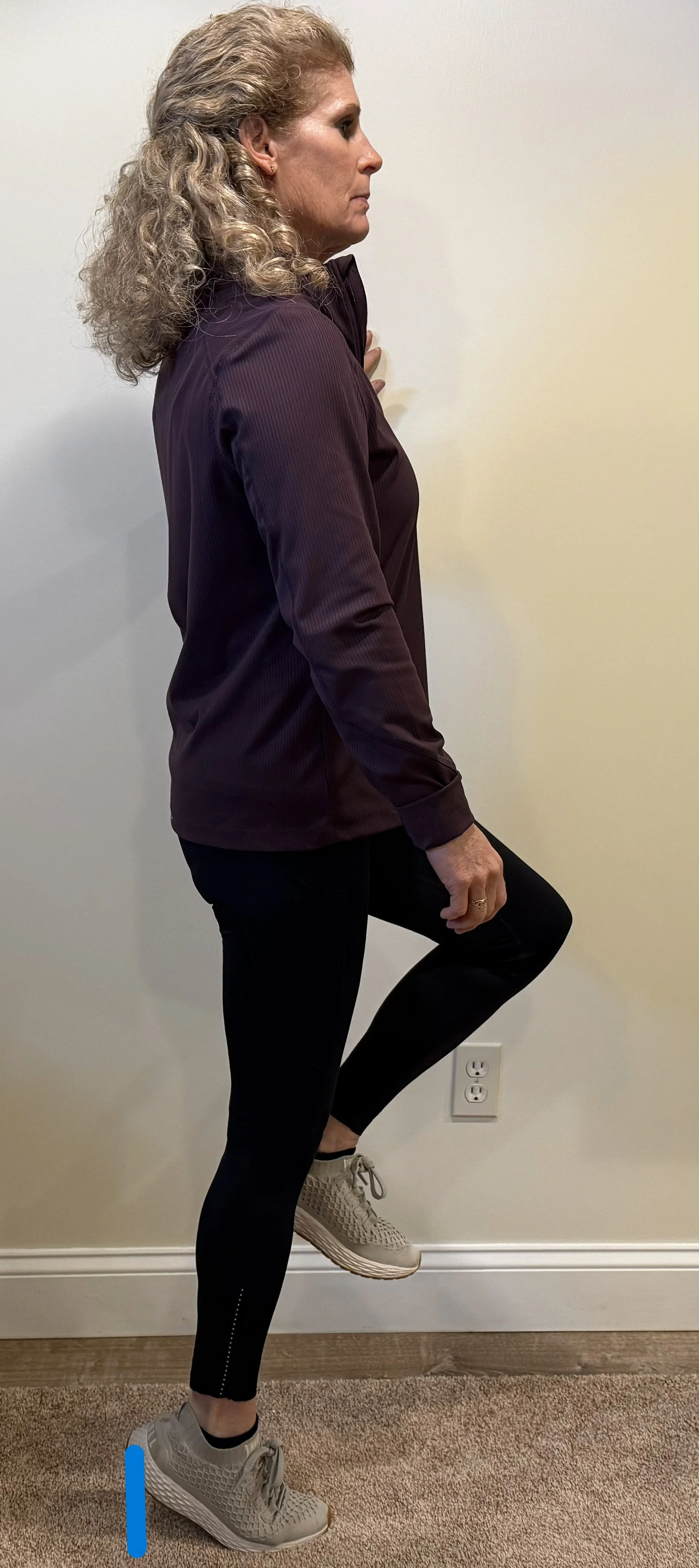
Assessment - Stand on your right leg and raise onto your toes lifting your heel off the ground 25 times with no rest breaks, Repeat with left leg.
Explanation – Normal Calf strength is the ability to complete a minimum of 25 single heel raises through full range of motion without a rest between lifts. Adequate strength is 24 to 10 lifts. Strong calf muscles make it easier to maintain your balance, walk on stairs and inclines, lessen joint stress by absorbing impact with each step, and enable longer periods of standing and walking. One of the beginning signs of frailty is weak calf muscles.
Author’s Note:
This set of assessments is designed to highlight common functional weaknesses, particularly in core strength and balance, that often go unnoticed until an injury or fall occurs. The good news is, now that you know, you can take positive steps to make real improvements.
Be sure to check out my follow-up blog, How to Improve Functional Strength and Balance . There, you will find clear explanations, practical activities, and easy-to-follow exercises that can help you build strength, improve balance, prevent injuries and feel more confident in your everyday movement.
Conclusion:
You have now completed my third and final set of assessments. The Posture & Alignment Assessments, Mobility & Flexibility Assessments , and Functional Strength & Balance Assessments were created to help you notice gradual changes in your body, changes that often go unnoticed until they begin to decrease your mobility or comfort. These assessments are designed to help you identify signs of limitations so you can address them before they progress. By becoming aware of these patterns, you can reduce unnecessary stress on your joints and lower your risk of developing the aches and pains many people mistakenly believe are an inevitable part of aging.
Our bodies are always working to heal if we give them the opportunity. Much of the tightness or discomfort we experience often comes from repetitive, unconscious habits woven into our daily routines. Once you become aware of these patterns, you can begin to change them and that’s where healing begins. You are already on the right path. Keep going!
I encourage you to repeat these assessments at least once a year. Many people find it helpful to do them around their birthday or at the start of a new year as a simple way to track their mobility, strength, and overall well-being. With consistent attention and the right exercises, it is possible at any age to maintain mobility, support joint health, and continue living an active, healthy, and independent life.